Practical information for founders and small businesses
Browse administrator-reviewed English articles translated from the Korean CMS, together with practical guides for restaurant startups, business improvement, franchise incubation, public projects, and Korea market entry.

Localized Practical Guides
Use the translated service guides below to understand the decision criteria and request consultation in your language.
Startup Consulting
Support from startup preparation and business selection to location analysis, business planning, and launch execution.
View details →Management & Sales Consulting
Diagnose sales, menu, marketing, costs, people, customers, and store operations using actual operating data.
View details →Franchise Consulting
Build a franchise model, headquarters structure, legal preparation, operating standards, and expansion system.
View details →Education & Lectures
Practical programs for founders, small businesses, restaurant operators, franchise companies, and public institutions.
View details →AI Business Diagnosis
AI-based preliminary diagnostics for founder readiness, location, sales, marketing, and franchise systems.
View details →About the Institute
K Startup Research Institute solves restaurant, small-business, franchise, and education challenges using field experience, data, and AI.
View details →When a Restaurant’s Name and Social Media Tell Different Stories, Align the Customer’s Reason for Choosing It in One Sentence
When a restaurant’s elements send conflicting messages—for example, the business name emphasizes tradition, the interior follows current trends, and social media posts focus only on discounts—customers may struggle to understand what makes the restaurant distinctive. Restaurant storytelling should not be treated as a promotional technique that embellishes the founder’s story. It should serve as an operating standard that consistently applies the customer’s reason for choosing the restaurant across its name, menu, s…
The Higher a Restaurant’s Opening Sales, the More Urgently It Should Review Cost, Kitchen, and Staffing Risks
When a restaurant generates higher-than-expected sales soon after opening, operators may rush to place additional orders, add staff, and expand sales channels. However, higher revenue does not guarantee profit. In an unprepared restaurant, it can simultaneously increase cooking delays, inventory losses, and declines in service quality. Early congestion should be treated as a stress test of the operating system, with costs, quality, and cash flow reviewed together.Focus First on What the Business Actually KeepsOpeni…
Before Opening a Restaurant, Turn Family Feedback into Numbers for Demand, Average Spend, and Break-Even Sales
When preparing to open a restaurant, family reactions can strongly influence the decision. However, the flavors and atmosphere that family members enjoy will not necessarily lead to purchases by target customers. Use family feedback to assess emotional support and operating conditions, while evaluating commercial viability through demand validation, expected average spend per customer, costs, the break-even point, and cash flow.Family Preferences Are Not Market DemandEven if family members say the menu is delicious…
Check Permits, Facilities, and Operating Hours Before Negotiating a Business Premium
When considering the acquisition of an existing store or a new commercial lease, beginning with negotiations over the business premium may cause you to overlook conditions that could restrict operations. In Korea, this premium is commonly called gwonrigeum. Paying it does not guarantee that the desired business can operate at the location. Before negotiating, investigate local market demand, permit and licensing feasibility, lease terms, facility capacity, and operating conditions by time of day. The reasonableness…
For Restaurant Startups, Profit, Funding, and Demand Calculations Should Come Before Family Expectations
When preparing to open a restaurant, family experience and expectations often directly influence business decisions. However, because family support or opposition may be shaped by relationships and emotions, it has limitations as a standard for validating sales potential or the cost structure. Founders should first quantify the required investment, fixed costs, cost of goods, and expected customer volume, then use those results to discuss with their families how much risk they are prepared to assume.Family Confiden…
Restaurant Restart Training: Reconstruct Closure Experience Through Sales, Cost, and Cash Flow Data
The core of restaurant restart training is to explain a past closure through numbers rather than emotions or memories. Operators must distinguish whether sales were insufficient, whether each additional sale increased losses, or whether the business was profitable but faced a cash shortage. Only then can they realistically plan the scale, menu, and financing of their next business. Because no supporting data were provided, this article focuses on the analytical criteria needed for practical training rather than on …
When Trade Area Changes Reduce Restaurant Regulars, Redefine Customers by Time of Day and Visit Purpose
When the residential population, foot-traffic patterns, and nearby businesses change, operating practices designed around a restaurant’s existing regulars may become less effective. Redefining customers is not about estimating their age or gender. It is a process of reassessing who visits, when and why they come, and what they choose. This article does not present the actual performance of a specific business. It provides an analytical framework for a generalized restaurant consulting case that can be used when no …
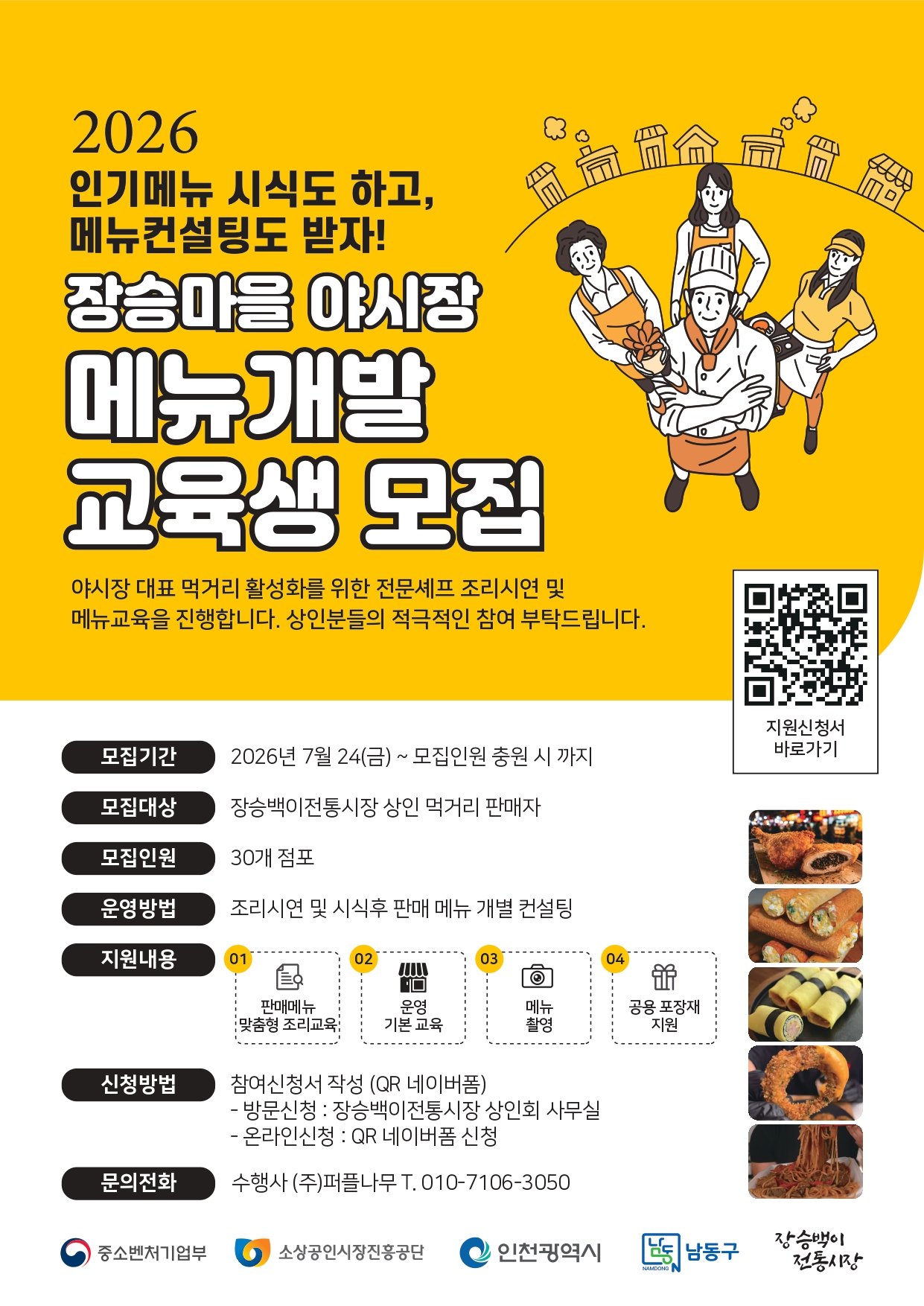
Jangseungbaegi Traditional Market Recruits Night Market Menu Development Trainees: Support for 30 Vendors and How to Apply
Jangseungbaegi Traditional Market in Namdong-gu, Incheon, is recruiting 30 food vendors for its night market menu development training program. The program provides professional chef demonstrations, vendor-specific menu consulting, menu photography, and shared packaging materials. Applicants should reconfirm the recruitment schedule and scope of support through the merchants’ association’s official notice before participating.
Why You Should Assess Your Work Style Before Starting a Restaurant: Business Owner vs. Craftsperson
The Challenge: Being Good at a Skill Is Different from Running a BusinessDuring restaurant startup consultations, prospective founders often say, “I am confident in my food,” or “No one is better than I am at serving customers.” Taste and service are, of course, important competitive strengths. However, being highly skilled in a specific area is not the same as being able to operate a restaurant reliably.In addition to menu development and cooking, a founder must review the local trade area, set prices, manage food…